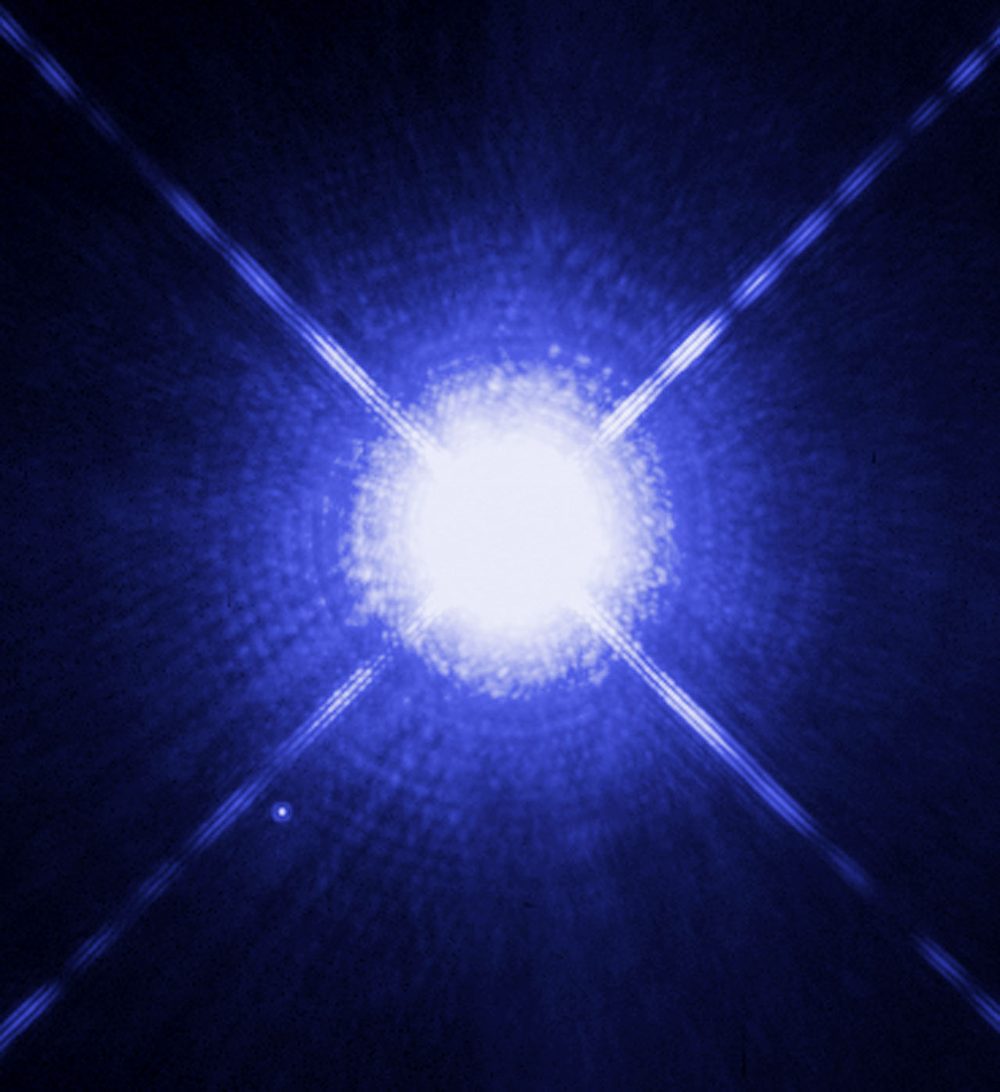
“There must be an invisible companion — a dark star, bound to the brightest.”
— Friedrich Bessel · on the wobble in Sirius · 1844 Paraphrased
He never saw it. Eighteen years later, Alvan Clark did — and we gave it something to do.
$SIRIUS buys cycles that resolve Sirius — three measured jobs: the binary orbit, the white dwarf's interior, the calendar of its first dawn. Every number on this page comes from published catalogs or runs locally in your browser. Nothing here claims a colony is running.
The network
One star, three measured problems.
Sirius is the best-documented star system in the sky: 5,000 years of calendars, 160 years of astrometry, one white dwarf. The network runs three job families against that record — the orbit, the interior, the calendar. Each job takes public catalog values, runs them through the equations on this page, and returns a receipt anyone can replay. The token settles jobs on Robinhood Chain; the compute layer is, for now, this page — no production node network is running.
The origin
It started as a wobble in the ledger.
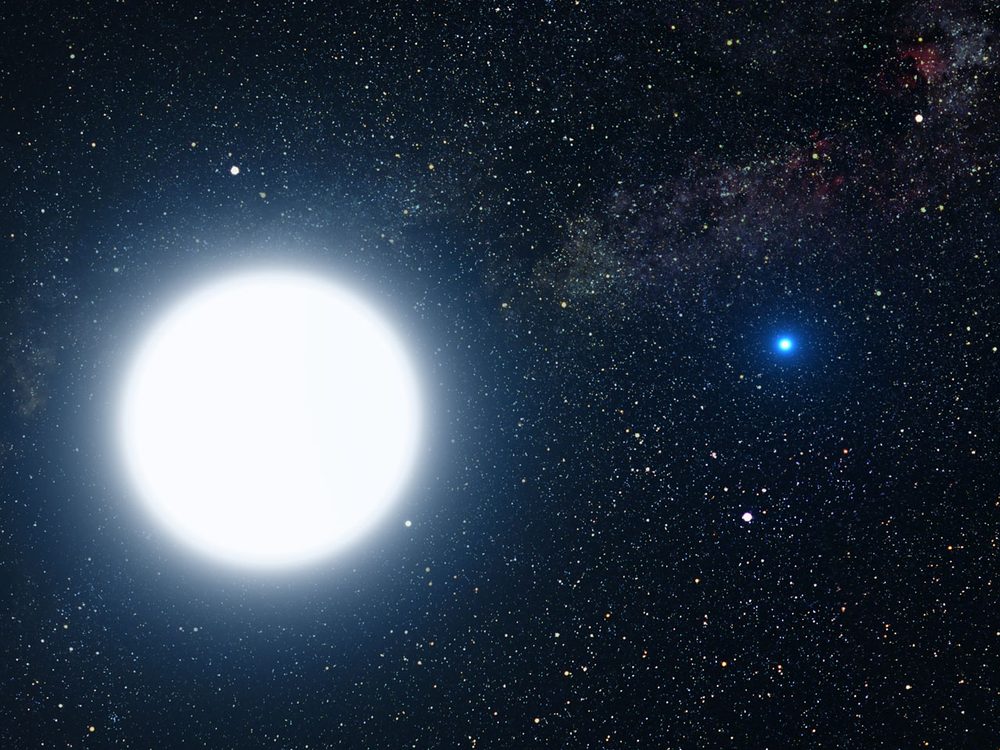
For five thousand years Sirius has been the calibration star of human time — the flood clock of Egypt, the dog days of Greece, the Celestial Wolf of China. Then in 1844 a Prussian mathematician noticed the star was not walking straight. The most famous unbuilt prediction in astronomy sat there for eighteen years. Here is the whole thread.
Why it has to exist
Sirius cannot share our clock.
The calendar argument is five thousand years old. The ledger argument is one number: 8.6. Light takes 8.6 years to cross the gap, so nothing that stays in step with Earth can settle a colony there — not a clock, not a calendar, not a ledger.
Cross-check: Bond et al. 2017 adopt a weighted parallax of 378.9 ± 1.4 mas → 8.61 ly. Both catalogs agree to 1%.
Two books, not one
A wallet holds an Earth balance and a Sirius balance. There is no single synced number, because physics does not permit one.
Local settles instantly
Compute, mining and shipments all clear on the Sirius book the moment they happen. The colony never waits on Earth for anything.
Crossing costs real time
Move value between the books and it travels at light speed — leaving one side at once, arriving years later. It cannot be recalled.
And the money itself becomes mass and energy.
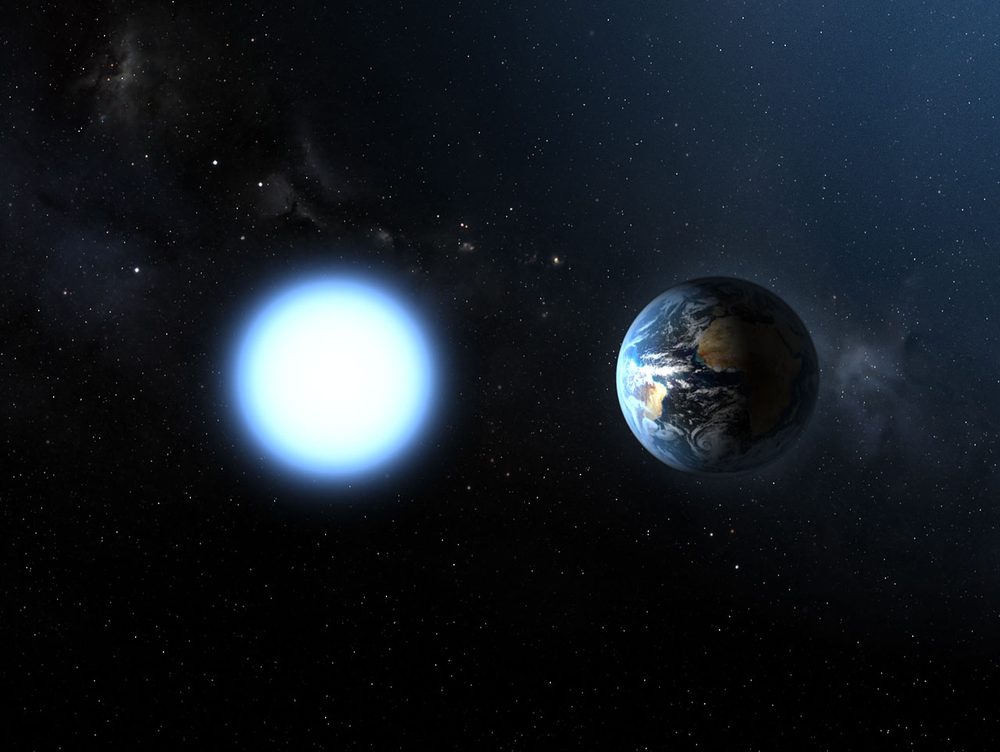
At Sirius the natural reserve is degenerate matter — Sirius B packs a solar mass into a body the size of Earth. A teaspoon of Sirius B's matter weighs about ten tonnes. Reserves are measured in mass and energy, computed rather than declared: every gram and every watt comes from a verified job on published data.
Real sky data
Explore the real sky.
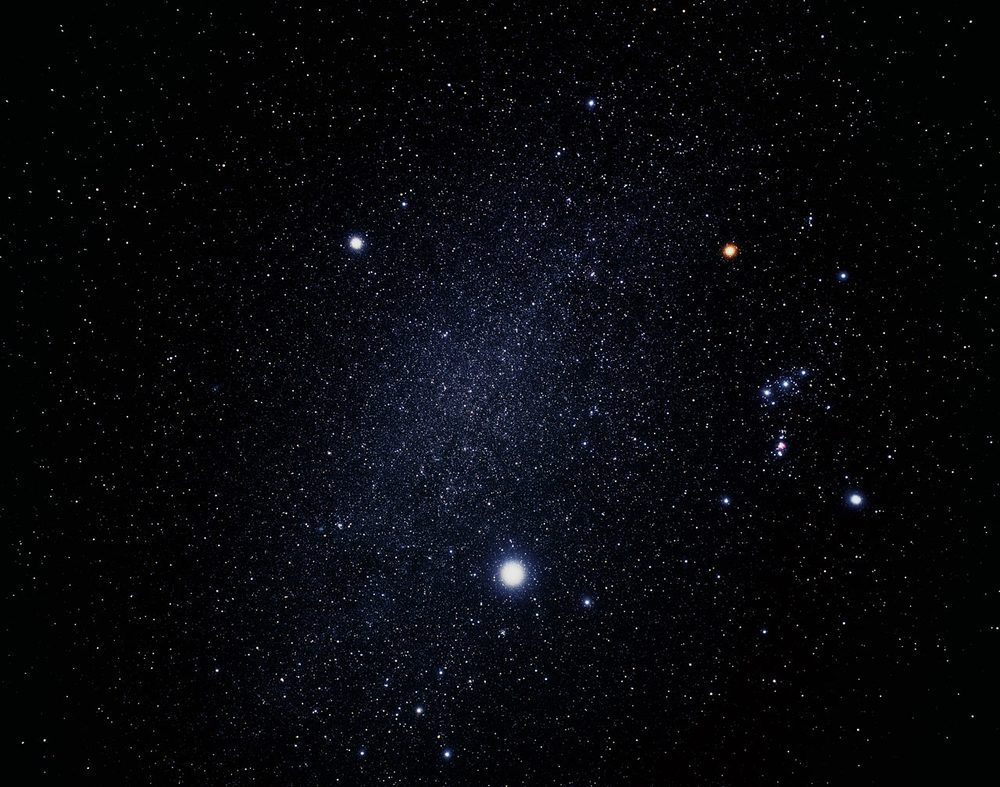
Click anywhere on the chart. Every readout is computed on the spot — the star's altitude and azimuth right now, when it rises and sets today, and the dawn it first clears the Sun where you are. The dashed guide shows Orion's belt pointing at the Dog Star, the way it has for every winter in human history.
What we compute
Workloads that resolve a star.
Three job families, each one a measurement rather than a rendering. A job takes published data, runs the equations locally, and returns a receipt anyone can replay. Click a card to watch the computation run again.
Sample a century of relative positions, solve the orbit, and classify every residual against the published solution.
Integrate the electron-degenerate equation of state at log g 8.6, reproduce the mass-radius point, and check the gravitational redshift.
For every latitude, find the first dawn the star clears the Sun by the arcus visionis, then reconcile the drift against the Egyptian civil year.
Try a job
Run the astrometry job in your browser: pick an epoch, get the Pup's position from the published orbit, and receive a local receipt. Nothing is submitted to any chain.
Jobs & receipts
A preview, not a mainnet.
Two catalog instruments keep the Dog Star honest, and below them a preview ledger shows what receipts will look like. The catalog numbers are published values you can re-verify; the ledger entries are demo rows — no production network records them.
Gaia cannot measure Sirius — at −1.5 mag it saturates the detector (Bond et al. 2017). Teff = 25,369 ± 46 K from Barstow et al. 2017 STIS spectroscopy; masses and B's radius from Bond et al. 2017; Sirius A's radius from Davis et al. 2011 interferometry.
Network protocol
From cycles to discovery.
Public catalogs in → three job families → a replayable receipt → L2 settlement. $SIRIUS buys compute cycles — not dividends, not equity, not ownership of Sirius.
Explore
Find a real plate worth resolving — a century of astrometry, one epoch at a time.
Dispatch
Spend $SIRIUS; a node takes the job.
Compute
Run the workload against published catalog values.
Commit
A hash-chained receipt lands in the public ledger.
Where $SIRIUS settles
$SIRIUS settles on Robinhood Chain.
The two-ledger argument needs somewhere for the Earth book to live, and it has to be somewhere cheap enough to pay for a compute job and final enough that the receipt still means something years later. Robinhood Chain is an Arbitrum Orbit layer 2 that has been open and permissionless since July 1, 2026. Jobs clear on the L2 in the time it takes to read this sentence, and the batches settle down to Ethereum. Gas is paid in ETH, not in $SIRIUS, so dispatching work never competes with securing the chain.
Contract address: TBD — published here and on the official account @Siriuscoin01 ↗ at the same time.
Until the same contract address appears on this site and @Siriuscoin01 ↗ at the same moment, no address is this project's — anything else claiming to be $SIRIUS is not ours.
FAQ
Why can't Gaia measure Sirius?
At −1.5 mag Sirius saturates Gaia's detectors, so its parallax is metered by Hipparcos and HST instead (Bond et al. 2017).
Is the two-ledger design a real cross-star protocol?
No. It is a design metaphor derived from a real constraint — 8.6 years of one-way light time. Nothing cross-star is deployed or claimed deployed.
Is the token live?
No. $SIRIUS is not deployed and has no contract address. Only trust an address published here and on @Siriuscoin01 ↗ at the same time.
Are the nodes decentralized?
There is no node network yet. Node and job counts on this page are demo values and are labeled as such.
Sources
- Bond et al. 2017, “The Sirius System and Its Astrophysical Puzzles”, AJ 154, 59 — arXiv:1703.10625 ↗
- ESA/Hubble heic0516, “Astronomers Use Hubble to 'Weigh' the Dog Star's Companion” — release page ↗ (images CC BY 4.0)
- van Leeuwen 2007, Hipparcos New Reduction — parallax and proper motion
- Sothic period — Wikipedia ↗
- Robinhood Chain — block explorer ↗